Panic attacks can feel terrifying. They come on suddenly, with intense fear or discomfort, and often bring strong physical symptoms, sometimes so intense that people think they’re having a heart attack. If you’ve experienced one, you’re not alone.
Understanding what a panic attack is, what causes it, and how it’s different from general anxiety can help you manage your symptoms and find the right support.

What Is a Panic Attack?
A panic attack is a sudden wave of intense fear that peaks within minutes. It can happen out of the blue or be triggered by a specific event or situation [1]. Some people have only one or two panic attacks in their lifetime, while others experience them more often.
Although panic attacks are a key part of panic disorder, they can also happen in other anxiety-related conditions, or even during periods of high stress. Even though they can feel terrifying, they aren’t dangerous. Your body is reacting as if there’s a real threat, but the panic will pass. Regardless of the cause, the experience is very real and very overwhelming.
What Does a Panic Attack Feel Like?
Panic attacks come with a mix of physical and mental symptoms that show up suddenly and feel overwhelming. The symptoms come on quickly and may feel frightening. Some common signs include:
- A racing heart or tightness in your chest that can feel sudden and intense
- Feeling like you can’t breathe, are choking, or might suffocate
- Shaking, trembling, or breaking into a cold sweat
- Dizziness or feeling faint, like the ground isn’t steady
- An intense urge to escape, even if there’s no real danger
- Numbness or tingling in your hands, feet, or face
- Feeling detached from your body or surroundings, like you’re watching things from the outside
- A deep fear that something awful is about to happen, like losing control, going crazy, or dying
Most panic attacks reach their peak within 10 minutes and fade soon after. However, the experience can leave you feeling drained or shaky for a while.
How to Get Through a Panic Attack
When a panic attack hits, it can feel like everything is spiraling out of control. Your heart is racing, you can’t catch your breath, and you might feel like something terrible is about to happen. But even though it feels overwhelming, a panic attack will pass, and there are things you can do to help you get through it.
Here are a few strategies that may help in the moment:
- Focus on your breath. Try a slow inhale through your nose, hold it for a moment, then exhale gently through your mouth.
- Ground yourself. Name five things you can see, four you can touch, three you can hear, two you can smell, and one you can taste. This helps anchor your nervous system.
- Remind yourself: “This is a panic attack. It will pass.” Panic attacks often peak within a few minutes.
- If possible, move to a quiet space where you can sit or lie down. Let the sensations move through you without fighting them.
These tools don’t make the panic disappear instantly, but they can help you feel less powerless. Over time, you’ll learn which techniques work best for you.
What Causes Panic Attacks?
There isn’t just one reason why panic attacks happen. Instead, they tend to develop from a mix of things:
- Family history – If anxiety or panic runs in your family, you may be more likely to experience it too
- Major stress – Breakups, job loss, burnout, or unresolved trauma can all be potential triggers
- Temperament – If you tend to be sensitive, cautious, or highly attuned to your body, you might be more prone to panic
- Brain chemistry – Imbalances in your brain’s stress response can make it harder to feel calm in anxious moments
Sometimes, panic attacks seem to come out of nowhere, which can make them feel even scarier. Other times, they happen in situations where you already feel uncomfortable, like flying, driving, or being in crowds.
Even if the trigger isn’t obvious right away, there’s often a pattern underneath. With the right support, those patterns can become clearer, and more manageable.
Can You Prevent Panic Attacks?
While you can’t always stop a panic attack from happening, there are ways to reduce how often they happen and how intense they feel.
This starts with understanding your triggers, supporting your nervous system, and learning regulation tools that actually work for your body. Lifestyle changes, like regular movement, better sleep and cutting back on stimulants, can also make a difference.
Therapy helps, too. Working with a trauma-informed therapist can give you the tools to better manage stress, shift how you relate to fear, and rebuild your sense of safety.
You may not have full control over panic attacks, but you can build confidence in your ability to face them.
Panic vs. Anxiety: What’s the Difference?
“Panic attack” and “anxiety attack” are often used interchangeably, but they’re not the same. Both are valid experiences, but they show up differently [2].
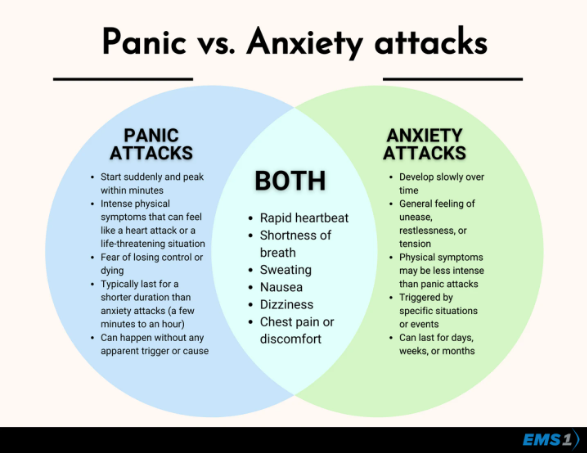
Panic attacks tend to be more intense and sudden. Anxiety builds more gradually and can last longer. Knowing the difference can help you figure out what kind of support you need.
When Should You Seek Help?
If panic attacks are starting to interfere with your day-to-day life, it might be time to talk to someone. This includes situations where:
- You’re avoiding certain places or activities in case a panic attack happens
- You’re constantly worried about when the next one will hit
- You feel like you can’t manage them on your own anymore
Panic attacks are common, but that doesn’t mean you have to deal with them alone. Therapy can help you learn what’s triggering them, build coping tools, and feel more in control again.
Final Thoughts
Panic attacks feel overwhelming but they are treatable. The more you understand them, the less power they have over you. By learning what triggers them, recognizing the symptoms, and getting the right support, you can take back control of your life.
At MindShift Integrative Therapy Centre, we offer anxiety therapy that is personalized, compassionate, and effective. Whether you’ve had one panic attack or are struggling with frequent episodes, we’re here to help you find relief and feel safe in your body again.
If you’re ready to feel calmer, more grounded, and more in control, book a session with MindShift Integrative Therapy Centre. We’ll help you move through panic, not around it, with strategies that make sense and support that truly lasts.
Sources:
- Mayo Foundation for Medical Education and Research (MFMER). Panic attacks and panic disorder
- Healthline. What’s the Difference Between a Panic Attack and an Anxiety Attack?