Complex Post-Traumatic Stress Disorder (C-PTSD) is a mental health condition that develops after long-term or repeated trauma, especially when that trauma begins in childhood [1]. Unlike Post-Traumatic Stress Disorder (PTSD), which is often linked to a single event, C-PTSD stems from experiences that are ongoing, inescapable, and emotionally overwhelming.
If you’ve ever felt stuck in survival mode or noticed yourself reacting strongly to things that “shouldn’t” bother you, you’re not imagining it. The aftershocks of long-term trauma can live in your body, your relationships, and your sense of self. This guide can help you start making sense of those patterns and remind you that healing is possible.
What Is Complex PTSD?
C-PTSD is a response to ongoing trauma. This might include years of abuse, emotional neglect, or being stuck in situations where you didn’t feel safe or in control. It often begins in childhood or in relationships where you couldn’t leave or protect yourself.
People with C-PTSD may struggle with their emotions, feel unsafe in their own bodies, or find it hard to trust others. It doesn’t just show up as fear. It can affect your self-esteem, your ability to connect with people, and even your sense of calm.
Common Symptoms of C-PTSD
C-PTSD includes the symptoms of PTSD, but also comes with more layers because of how deep the trauma goes. You might notice:
- Emotional flashbacks: Intense feelings like fear, shame, or sadness that come out of nowhere, even without a clear memory attached.
- Avoidance: You might avoid certain places, people, or even thoughts that bring back painful feelings.
- Negative self-view: Feeling like you’re broken, ashamed, or not good enough.
- Emotional ups and downs: Intense mood swings or feeling emotionally shut down.
- Struggles in relationships: You might fear being abandoned or feel like you can’t really connect with others.
- Emotional flashbacks: These don’t involve specific memories. Instead, you might suddenly feel intense fear, sadness, or shame without knowing why.
Emotional flashbacks can feel like you’re right back in the trauma emotionally, even if you don’t remember a specific event.
Where Does Complex PTSD Come From?
C-PTSD tends to develop when trauma happens over and over again, especially when there’s no way to get out. Some examples include:
- Ongoing childhood abuse or neglect
- Growing up in a home with domestic violence
- Being in a controlling or abusive relationship
- Long-term bullying or harassment
- Living in war zones or facing repeated violence in your community
Childhood trauma is especially deep when the person hurting you is someone you were supposed to trust. These experiences can change how you see yourself and the world around you for a long time. When you experience harm from someone who was supposed to protect you, it can deeply shape how safe you feel in the world, and how you see yourself [2].
C-PTSD vs. PTSD: What’s the Difference?
While both conditions involve trauma, they are not the same. Here’s how they differ:
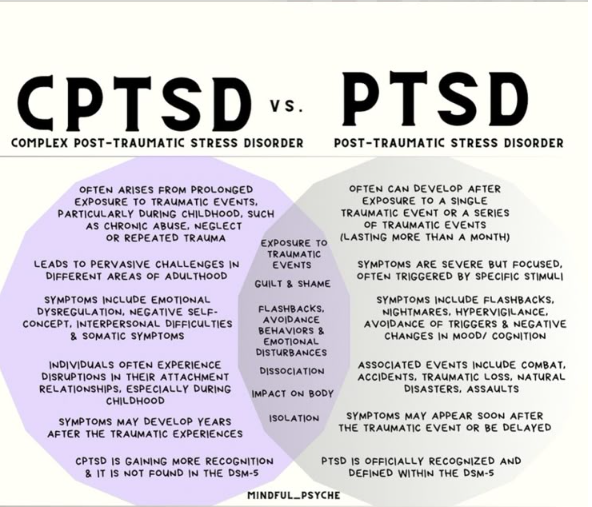
Because C-PTSD affects so many parts of life, treatment needs to be more holistic and long-term, often involving multiple approaches and lots of support.
What Helps You Heal?
C-PTSD can feel like a lot. But healing is possible. Many people find relief and growth with the right kind of help.
Common Treatment Options
- Trauma-focused therapy: Cognitive Behavioural Therapy (CBT) helps challenge negative thinking patterns, while other approaches like Eye Movement Desensitization and Reprocessing (EMDR) help reduce the emotional charge from past memories.
- Mindfulness and grounding techniques: Learning how to stay present and calm your body can ease emotional flashbacks.
- Medication: Some people find relief with medication, especially if they’re dealing with depression, anxiety, or sleep issues.
- Supportive relationships: Feeling safe with others is a big part of healing. This can come from therapy, group support, or kind, steady people in your life.
At MindShift Integrative Therapy Centre, we offer care that understands complex trauma. You don’t have to explain everything on day one. We’re here to meet you where you are and move at your pace.
Everyday Ways to Support Yourself
Outside of therapy, small steps can help you feel safer and more in control:
- Move your body: Walking, stretching, or gentle yoga can help release stress.
- Use calming routines: Music, breathing, or writing down your thoughts can help when things feel too much.
- Create a safe space: A soft blanket, quiet space, or calming scents can make your nervous system feel more at ease.
- Talk to someone you trust: Sharing how you feel with someone who listens kindly can help your body settle.
- Protect your peace: It’s okay to step back from things that bring up old pain. You don’t have to power through everything. Giving yourself permission to pause is part of healing too.
These small acts of care add up and they remind your brain and body that you’re no longer in danger.
When to Ask for Help
If you’re feeling disconnected, overwhelmed, or like you’re just getting through the day, you’re not alone. If your trauma started early in life, you may need deeper support and you deserve that.
There is nothing weak about asking for help. In fact, it’s one of the strongest things you can do.
Final Thoughts
Complex PTSD is real. It doesn’t mean you’re broken. It means you lived through something really hard. If your emotions still feel too big, or if your past still feels close, you don’t have to carry that alone.
At MindShift Integrative Therapy Centre, we offer trauma therapy grounded in compassion and cultural understanding. We help you gently untangle the past and reconnect with the parts of yourself that were never broken.
If you’re ready to move forward, book a session with us. You don’t have to carry this alone. Healing is possible and it starts with one safe step.
Sources:
- Cleveland Clinic. CPTSD (Complex PTSD)
- Northwestern University Feinberg School of Medicine. What Is Child Trauma?