If you often feel emotionally flat, distant, or like something inside you is missing, you might be avoiding your feelings without even realizing it. This can happen in two main ways: suppression or repression. This blog isn’t about fixing anything. It’s about helping you notice these patterns and understand what might be going on underneath.

Emotional Numbness and Shutdown: Common Signs
A lot of people experience emotional shutdown, especially when they’re stressed or overwhelmed. You might notice:
- Feeling blank or empty during scary or upsetting situations
- Losing track of your feelings entirely
- Feeling like you’re watching yourself behave, without experiencing it fully (dissociation) [1]
These signs are easy to miss but often mean your mind is trying to protect you by avoiding emotions.
Suppression vs Repression: What’s the Difference?
Both are ways we avoid uncomfortable feelings. But they work differently.
- Suppression happens when you notice a feeling and push it away on purpose [2]
- Repression happens when your brain hides the feeling before you even notice it
Think of suppression like putting a lid on a pot. Repression is like forgetting the pot is even on the stove.
What Suppression Feels Like
When you’re suppressing, you might:
- Say “I’ll deal with it later” when you’re upset
- Try not to cry in front of others
- Stay busy with scrolling, work, or TV so you don’t have to feel
- Tell yourself it’s not safe to feel anger, sadness, or grief
It might feel helpful in the moment, but research shows suppression can build up stress in your body and affect your mood over time.
What Repression Feels Like from the Inside
Repression is harder to notice because it happens automatically. You might:
- Feel numb and not know why
- Have blank spots in your memory around painful times [3]
- React strongly to something but not understand why [4]
Your mind may be protecting you from feelings that were too overwhelming in the past. But those feelings don’t just disappear. They can show up in your body and emotions later on.
Emotional Numbness, Shutdown and Blunting
If you often repress or suppress your emotions, it can lead to:
- Feeling flat or muted emotionally
- Watching your life instead of feeling part of it
- Shutting down or going quiet when emotions come up
These are common signs of long-term emotional avoidance. They can make it harder to connect with yourself and others.
What Happens When Feelings Stay Locked Away
Pushing feelings aside might help you get through tough days. But if this becomes your default, it can start to take a toll. Over time, you may notice:
- Low mood or emptiness
- Feeling stressed even if you seem calm
- Trouble focusing or remembering things, especially under pressure
Avoiding feelings can affect your mind, body, and relationships, even if you don’t realize it right away.
Why Suppression and Repression Happen
These habits usually start for a reason. You may have learned them to cope with hard things. They often come from:
- Growing up around emotional chaos or trauma
- Being taught that crying or vulnerability is wrong
- Dealing with emotions that felt too big or unsafe to express
Even if these habits feel harmful now, they may have once helped you feel safer.
How to Start Noticing What’s Hidden
You don’t have to figure it all out at once. But you can start by asking yourself:
- When I try to feel something, do I go blank?
- After a tough moment, do I feel disconnected or flat?
- Do I avoid checking in with myself because I don’t want to feel too much?
- Can I remember a time I felt joy, excitement, or even sadness fully?
These questions can help you tell the difference between what’s hidden and what’s being pushed away.
Repression vs Suppression: Which Might You Be Using?
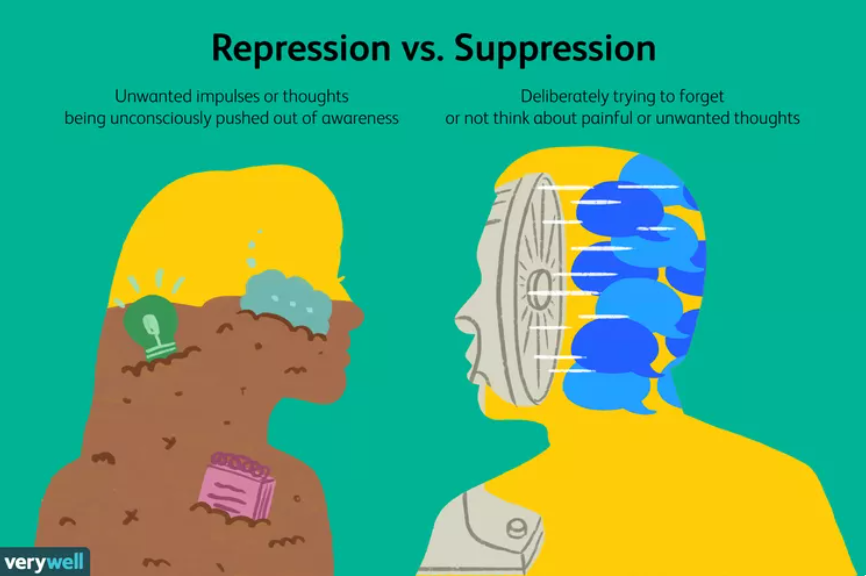
If you know you’re pushing feelings down, that’s suppression. If you feel numb or emotions seem missing, repression might be at play. Both are normal. Both are ways your mind tries to take care of you.
Your Experience Is Real
If you feel emotionally distant or shut down, it doesn’t mean anything is wrong with you. It means your mind has been doing what it can to protect you. That’s a powerful thing.
You might notice:
- Feeling emotionally flat or disconnected from others
- Going quiet or shutting down when things get stressful
- Avoiding emotional conversations or situations
These are signs of coping. They’re not flaws. And you don’t have to stay stuck there.
Want to Explore This Further?
At MindShift Integrative Therapy Centre, we’re here to support you in a way that feels gentle and safe. We offer a variety of services to meet you where you are, explore our Individual Therapy to explore emotional patterns and reconnect with yourself. Teen Therapy for young people learning how to navigate their feelings. Stress and Burnout Therapy to help manage overwhelm and find balance again. You don’t need to explain everything or have it all figured out. If you’re feeling shut down, emotionally distant, or simply tired of carrying things alone, therapy can help.
You deserve to be heard, understood, and supported. Let’s walk this healing journey together, at your pace. Reach out anytime to learn more about how we can help.
Frequently Asked Questions:
They can overlap, but they are not the same thing. Emotional numbness is often a protective response, your mind pulling back from feelings that feel too intense or unsafe. Depression is a clinical condition with its own range of symptoms. That said, long-term emotional avoidance can contribute to low mood and emptiness over time. If you are unsure what you are experiencing, speaking with a therapist can help you get a clearer picture.
Yes. When feelings do not get processed, the body often holds them as tension, fatigue, or a stress response that never fully settles. Many people come to therapy not realizing how much their emotional patterns are showing up physically. Working with a therapist who takes a mind-body approach can help you start to release what has been stored, not just understand it intellectually.
That is more common than people think, and it is not a sign that something is permanently wrong with you. It usually means the protective layers go quite deep. This is one of the reasons therapy can feel so different from trying to work through things on your own. A trauma-informed therapist can help you reconnect with your emotional experience slowly and safely, without pushing you further into shutdown.
Sources:
- Ohwovoriole, T. Mature vs. Primitive Defense Mechanisms
- Dunn, B.D., Billotti, D., Murphy, V., Dalgleish, T. The consequences of effortful emotion regulation when processing distressing material: A comparison of suppression and acceptance
- Boland, M., Papa, A., Oliver, E. et al. Depressive Suppression: Effects of Emotion Suppression on Multiple Emotions for Depressed Versus Nondepressed Individuals. Cogn Ther Res 43, 910–925 (2019). https://doi.org/10.1007/s10608-019-10002-5
- Gross, J.J., Levenson, R.W. Emotional Suppression: Physiology, Self-Report, and Expressive Behavior