If you’re looking into therapy for anxiety, emotional ups and downs, or trouble handling overwhelming feelings, you’ve probably come across Cognitive Behavioural Therapy (CBT) and Dialectical Behaviour Therapy (DBT). Both are well-known and effective. But they work in different ways. This article can help you understand the difference so you can figure out what might feel right for you.

What Is Cognitive Behavioural Therapy (CBT)?
Cognitive Behavioural Therapy, or CBT, helps you understand how your thoughts, emotions, and actions are connected. The idea behind CBT is that unhelpful thoughts can shape how you feel and act. If you can shift the way you think, you can begin to feel and respond differently.
CBT is often used to treat anxiety, panic, worry, overthinking, depression, PTSD, OCD, and more. A large review of studies has shown that CBT is one of the most effective treatments for generalized anxiety and that the benefits often last even after therapy ends [1].
This approach is structured and goal-focused. Sessions often include tools like tracking thoughts, facing fears gradually, or planning daily activities that support your mental health. Most CBT programs last around 12 to 20 weeks.
What Is Dialectical Behaviour Therapy (DBT)?
Dialectical Behaviour Therapy, or DBT, was created in the 1980s by psychologist Marsha Linehan [2]. It was first used to treat borderline personality disorder and self-harm, but now it helps with a wide range of emotional challenges.
Unlike CBT, DBT puts a strong focus on acceptance and change. It teaches you how to validate your emotions while also building skills to handle them in a healthier way.
DBT includes four main skill areas:
- Mindfulness – paying attention to the moment without judgement
- Emotion regulation – naming your feelings, understanding them, and learning how to shift them
- Distress tolerance – getting through crisis moments without making things worse
- Interpersonal effectiveness – improving communication and boundaries in relationships
DBT is usually longer-term and often includes both individual therapy and group sessions to learn and practice these skills [3].
How CBT and DBT Compare for Anxiety
CBT is often the first therapy recommended for anxiety. It helps you notice anxious thoughts, challenge them, and slowly face the things you’ve been avoiding. It works especially well for generalized anxiety, panic, social anxiety, OCD, and PTSD.
DBT can also help with anxiety, especially if you experience intense emotions, feel overwhelmed quickly, or have trouble calming yourself down. If your anxiety comes with emotional ups and downs, impulsive choices, or conflict in relationships, DBT may be a better fit.
A 2023 review found both therapies help with anxiety and depression. But DBT also supports people who are managing bigger emotional patterns, like self-harm urges or crisis behaviours [4].
Key Differences
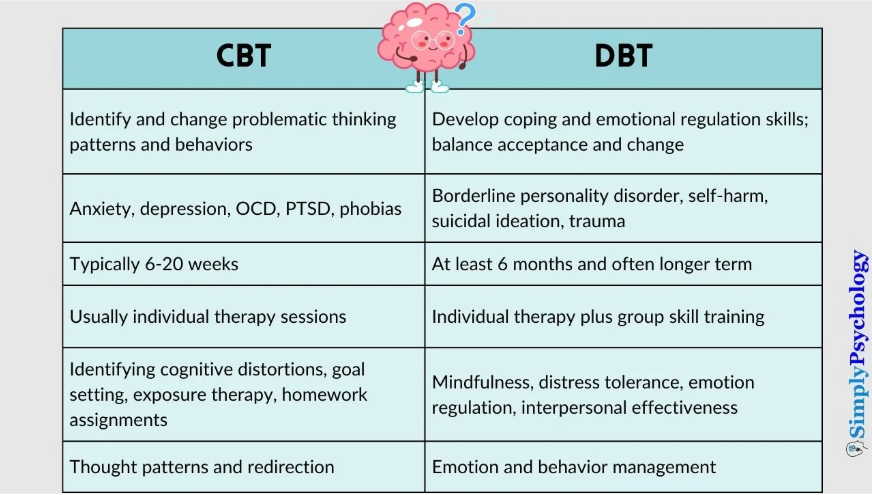
DBT was developed from CBT, but it adds something extra. It includes mindfulness and acceptance skills that CBT usually doesn’t cover. While CBT focuses more on thoughts, DBT helps you build emotional balance and resilience.

Who Might Benefit More from CBT vs DBT?
CBT might be right for you if you:
- Want short-term support to understand and shift your thoughts
- Have specific worries or patterns of overthinking
- Prefer clear structure and homework between sessions
DBT might be a better fit if you:
- Feel things deeply and find it hard to manage emotions
- Struggle to stay grounded during emotional moments
- Need practical tools to handle crisis situations
- Would benefit from group support and practising new skills
Can You Use Both?
Yes. Many therapists combine CBT and DBT techniques. You might learn how to reframe anxious thinking (CBT) while also building emotional awareness and coping skills (DBT). Together, they can support both your mind and emotions.
Self-Reflection: Which Therapy Fits You?
Ask yourself:
- Do you struggle most with anxious or negative thinking or with strong emotional waves that feel overwhelming?
- Would you like to learn tools to handle crises or strong feelings at the moment?
- Do you prefer short, focused therapy or a longer-term approach with skill training?
- Are you open to group sessions to learn and practise skills?
- Do you want both thought‑based support and emotional regulation skills?
If most answers point to managing thoughts and challenging anxiety directly, CBT may be the right starting point. If your goals include feeling steadier in emotions, managing relationship stress or impulsivity, DBT might fit better or a mix of both.
Why Try MindShift Integrative Therapy Centre?
At MindShift Integrative Therapy Centre, our therapists are trained in both CBT and DBT. We often blend them to suit your needs and pace. Whether you’re working through anxiety, emotional regulation, or relationship stress, we’ll build a therapy plan that fits your goals.
Interested in exploring which therapy suits you?
We offer free consultations to help you explore your options. No pressure. No rushing. Just space to talk through what’s going on and figure out what kind of support feels right.
You deserve care that fits you, not the other way around. Let’s figure it out together.
Frequently Asked Questions:
You do not need to be in crisis to benefit from CBT or DBT. If anxiety, low mood, or emotional overwhelm is affecting your daily life, your relationships, or how you feel about yourself, that is enough of a reason to reach out. Therapy is not reserved for worst-case situations. It is for anyone who wants to feel better and have better tools to work with.
Your first session is more of a conversation than a structured therapy session. It is a chance for your therapist to understand what you are going through and for you to get a sense of whether the fit feels right. There is no pressure to commit to a specific approach right away. At MindShift Integrative Therapy Centre, we offer free consultations so you can explore your options before making any decisions.
It depends on what you are working on and which approach is used. CBT tends to show results within a few months for many people. DBT is longer-term by design, as building emotional skills takes consistent practice. Most people notice some shift in how they understand or respond to their experiences fairly early on, even if bigger changes take more time.
Sources:
- Papola, D., Miguel, C., Mazzaglia, M. et al. Psychotherapies for Generalized Anxiety Disorder in Adults
- Chapman, A. L. Dialectical Behavior Therapy
- Jones, B.D.M., Umer, M., Kittur, M.E. et al. A systematic review on the effectiveness of dialectical behavior therapy for improving mood symptoms in bipolar disorders. Int J Bipolar Disord 11, 6 (2023). https://doi.org/10.1186/s40345-023-00288-6
- Mei-Rong, P., Fang, H., Meng-Jie, Z. et al. A comparison of efficacy between cognitive behavioral therapy (CBT) and CBT combined with medication in adults with attention-deficit/hyperactivity disorder (ADHD)