The holidays are supposed to be a time of warmth, connection and rest. But for many young adults, they bring something else: a flood of online posts, constant feeds of “perfect” moments, and a sense of being present everywhere but with yourself.
You may feel digital overwhelm.
You might notice Instagram anxiety when you check the feed and compare.
You might sense that your phone is present more than your own thoughts.
That’s why a social media break during the holidays isn’t a luxury. It’s a powerful way to reclaim your time, your space and your relationships. Research supports that limiting daily social media use can boost emotional well-being [1].
Let’s walk through how this works, what it looks like and how you can do it, with kindness for yourself and your season.
Why the Holiday Frenzy Amplifies Digital Overwhelm
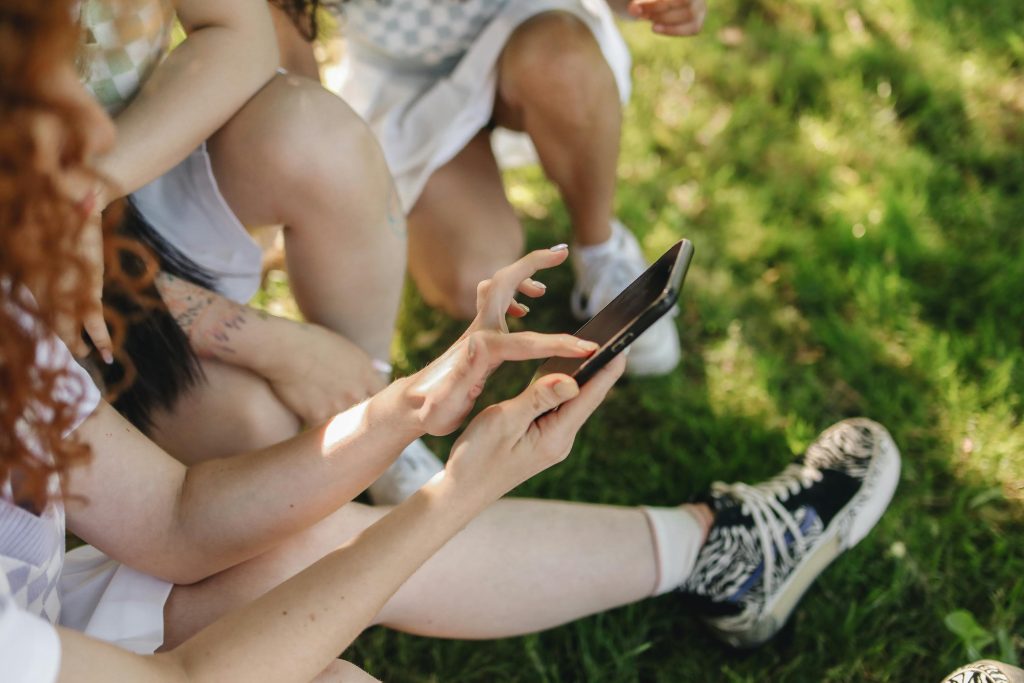
During the holiday season, the digital world ramps up. You might scroll through posts of glowing homes, happy families and festive gatherings. That can spark comparison, “should-be” thinking and a sense of missing out.
Longitudinal cohort studies show that adolescents who spend more than 3 hours per day on social media have a significantly increased risk of internalizing problems (depression, anxiety) and comorbid internalizing/externalizing problems, even after adjusting for baseline mental health [2]. Plus, the holiday calendar often leaves less margin for error, less time for rest, and more pressure to “be in the moment”.
This mixture can lead to:
- Feeling you’re not measuring up.
- Your focus is on your screen more than your coffee mug or your conversation.
- Your mind is “on” even when you’re lying in bed.
A social media break during the holidays creates breathing room, so you can actually inhabit these weeks rather than just scroll through them.
Recognizing the Signs: When Holiday Screen Use Becomes a Problem
You don’t need to hit “crisis mode” before choosing a break. Early signs matter, and because of heightened activity during holidays, they might show up more clearly.
Watch if:
- You wake up and go straight to your phone. Then you feel tired even though you slept.
- At a gathering, you realize you’ve checked your phone more than you’ve talked.
- When you see a post, you feel the mix of envy and self-criticism.
- You feel constantly “on” or tense, not just busy. Your nervous system doesn’t feel safe resting.
- You use your phone as “downtime”, but you still don’t feel rested. That’s digital overwhelm.
If any of these sound familiar, a digital detox (or a holiday-specific unplug plan) might be exactly what you need.
What a Holiday Social Media Break Actually Does (and Why It Works)
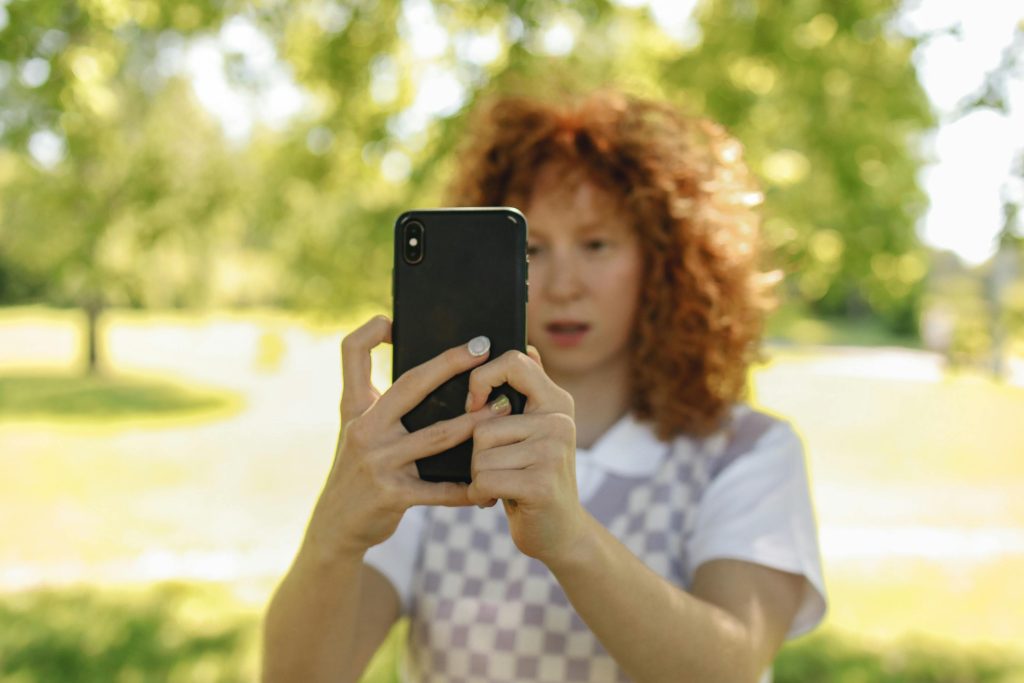
You might wonder: “Does unplugging help?” Yes. Science is catching up with practice.
One study found that people who deactivated their social media accounts (including Instagram and Facebook) for six weeks saw meaningful improvements in well-being, comparable to standard psychological interventions [3].
What happens when you give yourself a break:
- Your brain gets less comparison fuel. Less “look what others have”.
- Your nervous system gets fewer jolts from pings, notifications, and tags.
- You have more real time to engage with the world in front of you.
- You build the capacity to feel your own feelings rather than scroll past them.
In a holiday context, a digital detox helps you choose presence. It shifts you from “scrolling through the season” to “living through the season”.
Create Your Holiday Unplug Plan (That Actually Feels Doable)
A break doesn’t mean full silence. It means smarter boundaries. Here’s a step-by-step plan for setting holiday screen limits and building a calmer season.
Step 1: Choose Two Core Times Where You’re Offline
Maybe dinner time and the hour before bed. Declare: “This is phone-free time.”
Step 2: Turn Off Non-Essential Notifications
Your phone doesn’t need to light up every time someone likes your story. Less ping = less agitation.
Step 3: Move the Phone Away During Shared Moments
Place the device in another room during gatherings or game nights. Your presence becomes the strongest connection.
Step 4: Create “Swap-In” Activities
When you feel the pull to open Instagram or scroll, swap in something else:
- A short walk outside
- A journal prompt like “What did I feel today?”
- A board game with family
- A quiet tea or reading
These help you resist the reflex to scroll and build alternative habits.
Step 5: Invite Accountability
Tell one friend or family member your plan. When you share your intention, it becomes real. You might even get a partner in your unplugged.
Step 6: Reflect on What You Notice
After a week of your plan, ask: “What felt different? What did I miss? What felt more alive?”
You’re not aiming for perfection. You’re aiming for improvement. This plan invites presence over pressure.
Dealing with Social Media Anxiety and Digital Overwhelm
Instagram isn’t neutral. It’s designed to engage, to prompt you to post, to compare. That’s why social media anxiety is a real term. Research finds that those with social anxiety are more likely to base self-worth on Instagram feedback [4]. One study describes social media fatigue results in the elevation of anxiety level. Users in a state of social media fatigue are prone to psychological anxiety because they are physically and mentally exhausted due to excessive cognitive energy and have difficulty in adequately regulating or controlling their emotions.
Here are ways to ease both:
- Clean up your feed: Unfollow or mute accounts that trigger comparison.
- Limit your Instagram time: You might allow 20-30 minutes a day for it; then stop.
- Use your phone with intention: Ask yourself before opening, “Why am I opening this?”
- Practice “offline recovery”: When you feel overwhelmed, try deep breathing for two minutes instead of scrolling.
When you apply holiday screen limits, you give your mind a break from the noise and make space for your real experience.
Rebuilding Family Connection and Carrying Your Break Beyond the Holidays
One of the most meaningful effects of taking a social media break during the holidays is how it strengthens family connection. When screens are set aside, even simple moments feel more alive. You may notice that meals are calmer, conversations flow more easily, and time together feels less rushed. Digital detox habits show that reducing screen time can support deeper emotional bonding and more present interactions.
To make this feel doable, try small shifts such as:
- keeping phones off the table during meals
- setting a shared no-phone hour each day
- choosing one tech-free activity like a walk, a board game or a movie night
- reflecting afterwards on what felt grounding or comforting
- being kind to yourself on the days you slip back into old habits
- curating your feed so it supports your mental health
These small choices create room for real presence.
A holiday break is not about perfection. It’s about creating space to reconnect with your family, your environment and yourself.
How MindShift Integrative Therapy Centre Can Walk With You
At MindShift Integrative Therapy Centre, we support young adults navigating digital overwhelm, social media anxiety, holiday stress and the challenge of balancing online life with real life. We offer individual therapy and teen therapy. You don’t need to wait until you’re burnt out or broken. You just need the desire to feel different.
This holiday season, give yourself permission to unplug. To slow down. To reconnect with your surroundings, with your loved ones, and with yourself.
You’re not missing out when you’re offline. You’re showing up for your life.
Sources:
- Faulhaber, M. E., J. E. Lee, and D. A. Gentile. The Effect of Self-Monitoring Limited Social Media Use on Psychological Well-Being. Technology, Mind, and Behavior, 4 (2), 1-10. 2023. https://doi.org/10.1037/tmb0000111
- Riehm, Kira E., Kenneth A. Feder, Kayla N. Tormohlen, Rosa M. Crum, Andrea S. Young, Kerry M. Green, Lauren R. Pacek, Lareina N. La Flair, and Ramin Mojtabai. “Associations between time spent using social media and internalizing and externalizing problems among US youth.” JAMA psychiatry 76, no. 12 (2019): 1266-1273. doi:10.1001/jamapsychiatry.2019.2325
- Allcott, Hunt, Matthew Gentzkow, Benjamin Wittenbrink, Juan Carlos Cisneros, Adriana Crespo-Tenorio, Drew Dimmery, Deen Freelon et al. The Effect of Deactivating Facebook and Instagram on Users’ Emotional State. No. w33697. National Bureau of Economic Research, 2025. DOI 10.3386/w33697
- Lopez, Richard B., and Isabel Polletta. “Regulating self-image on Instagram: Links between social anxiety, Instagram contingent self-worth, and content control behaviors.” Frontiers in Psychology 12 (2021): 711447. https://doi.org/10.3389/fpsyg.2021.711447